Showing posts with label Iceland. Show all posts

Wednesday, 29 November 2017

Nature’s Classroom


An unedited version of my story published in the Nov-Dec 2017 edition of asiaSpa India.

I should have been distressed, but I wasn’t. I should have moped, but I didn’t. I continued sipping my hot chocolate as though nothing had happened, staring expectantly through the foggy window for signs of that magical swoosh of green, the Aurora Borealis. Worried about my lack of reaction to the news, my husband proceeded to console me by saying that he was hopeful about the storm not setting in the next day. I cheerfully told him that we should turn back as advised, halfway into our road-trip around Iceland - the trip I had meticulously planned, the trip that was all I could talk and dream about since six months, the trip that was so expensive that I felt pangs of guilt in spite of having painstakingly saved up for it.

That night, we were the only guests at a cosy wooden inn at Breiddalsvik, a small fishing town in Iceland’s craggy East Fjords. For that matter, in the week we had spent driving from Reykjavik - Iceland’s capital - to Breiddalsvik, we had been the only guests everywhere. I am not exaggerating for effect – we were literally the only two people on the road at most times, barring at Reykjavik, home to almost half of Iceland’s minuscule population. In October, at the onset of winter, the weather in Iceland is at its most tempestuous. So when the locals at Breiddalsvik told us that a ‘don’t travel for a few days’ warning had just been issued because of a storm brewing all along our route, we knew it was prudent to turn back. That was a huge blow, but why wasn’t I upset? The answer surprised me.

Stormy weather in October

Shorn of creature comforts like luxury accommodation, local cuisine (being a vegetarian limited me) and ‘branded’ shopping, which sometimes tend to define a travel experience, Iceland had helped me discover what was important to me. I learnt to live in the moment, without a plan - quite a challenge for someone who likes to be on top of things. My definition of well-being changed; I realised that feeling alive and happy could result from just a consciousness of the world, my surroundings, and its wonders, including undesirable ones like the impending storm.

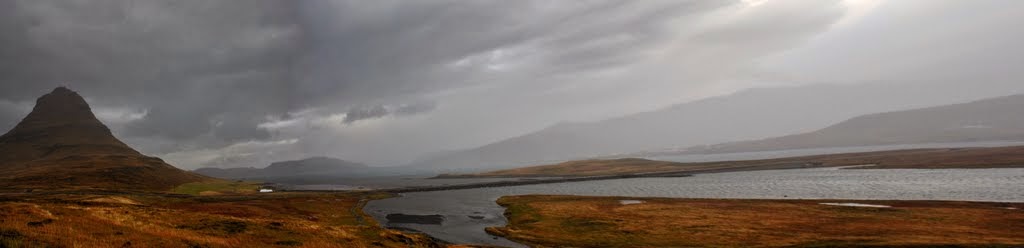
A week ago, a day after I arrived in Iceland, the Snaefellsnes Peninsula welcomed me with howling wind that rattled our parked SUV like a cradle. Overcome by fear, I sat clutching the car door until my knuckles hurt. Our guide had already descended to the bottom of the hillock, and gesticulated wildly, beckoning me to join him. Mustering up all my courage, I stepped out into the 25 mps (90 kmph) wind, the warning for which blinked on the digital display by the roadside, and had prompted us to stop driving until it subsided. I quickly wobbled down the slope. There, sheltered from the wind by the rocky drop, I gaped at the deceptively tranquil sight before me: Kirkjufell, with its small cascading waterfalls. 

The hill Kirkjufell, with the waterfall Kirkjufellsfoss in the foreground.  

As the adrenaline coursing through me slowly mellowed, and my heart ceased to thump wildly, I wondered whether the threat of danger made one feel alive. The epiphany came yet another day, when I walked the slippery slopes of a glacier, with crampons strapped on, every step calculated and purposeful, avoiding crevasses and thin ice. In spite of the intense concentration, my mind registered both the sheer expanse of the glacier as well as the delicacy of the lace-like patterns on patches of frozen ice. Yes, the threat of danger had indeed made me pay closer attention to my every movement, and details of the landscape, which may have otherwise gone unnoticed.

The summit of the glacier Svinafellsjokull.

Iceland took me out of my comfort zone, challenged me to rely on cues given by nature, and reinforced my belief in goodness. A fairly egalitarian society; the refusal to have an army; the rental company asking me to leave my car with its doors unlocked and the keys inside so that they could pick it up; museums refusing to charge us for our second visit because they said they noticed how much time we spent appreciating each exhibit - through large doses of pragmatism and visual poetry, Iceland reassured me that a lot is well with the world.

Bobbing in the hypnotic blue water of the Blue Lagoon, a geothermal spa, images from the road-trip flashed before my eyes. Geysers, bubbling soil, volcanoes, lava fields, craters, glaciers, icebergs, auroras, and fjords - phenomena that had merely been words, were now memories. To be in the lagoon’s warm water while the land around was in winter’s grip was a surreal experience. Slathering some mineral-rich mud on my face, I floated to the bar for a drink, happy that driving back had given us more time to spend at the same places, as well as a chance to meet those who had waved us goodbye days earlier. Our promise of returning another day had come true, albeit sooner than expected.

A day before I left Iceland, I stood on the viewing deck of Perlan, an erstwhile water tank in Reykjavik converted into a public building. The blue ray of light from the Imagine Peace Tower - John Lennon’s memorial – shot up into the night sky, with a full moon for a neighbour. Below twinkled Reykjavik’s lights, as though all the stars had fallen down from the sky. And then, unexpectedly, two green beams emerged from the moon and snaked across the inky canvas. The Aurora Borealis is rarely seen unless the sky is clear and dark, yet here it was, defying convention. The unbridled joy in that moment was a fitting culmination to what had been constantly reinforced throughout my trip to Iceland: “Allow yourself to be surprised.”

The Aurora Borealis (northern lights) over Reykjavik. The blue 'Imagine Peace' light, conceptualised by John Lennon’s wife Yoko Ono, is lit every night from his birthday in October until the day he was shot in December.


Thursday, 28 November 2013

Coasting around Iceland


A version of my photo-essay published in the March 2013 edition of OutlookTraveller


“Take a U-turn. You are driving on the sea!” she shrieks, for the fifth time. I stop, sigh and peer through the windscreen. A foggy darkness stares back at me. I roll down the windows and look out; there’s water to the left. And, more water to the right. As the howling wind conducts an ominous orchestra, I begin to sweat profusely despite the bone-chilling winter day. I was destined to die on the first day of my Icelandic road trip. A tear glides down my cheek as I watch two beams of light pierce through the thick fog; “Hope I’m at least off to heaven”, I think. 

Suddenly, I realise there’s a car attached to the light. It shakes me out of my stupor. I call and wave madly for it to stop but it whizzes past. Having partially gathered my wits, I look at the paper map on my lap; it distinctly shows a road there. I consider the possibility that the GPS may be wrong. If a car did emerge from the ‘water’, there should be a road ahead. A nerve-wracking half-hour drive later, I reach a small village where I’m reassured by the kindly man at a cafe that my destination for the night lies not far. 

Just earlier that bright, sunny morning, I’d set off cheerfully from Reykjavik, Iceland’s capital. After driving a while on Route-1, Iceland’s arterial ring road, I’d veered off to see a few towns by the coast. Lunch overlooking the Atlantic and a visit to a lighthouse later, I’d continued along this less-trodden road, intending to join Route-1 a little ahead. They say that Iceland can show you all seasons in a day and they weren’t joking. While I was at the lighthouse, the blue sky and the sea had churned violently and turned grey, accompanied by squalls. The road snaked along the coast, close enough for the ocean to spit at me. To the left of the road were eerie lava fields, under which lay buried people and villages from centuries ago. I’d never seen such a dark 3 pm in my life. That is when the GPS-lady first announced that I was off-road. This day was a sign of how my holiday in Iceland was going to be unlike another.

Tiny Iceland is akin to a huge exhibition by Mother Nature, showing off all her skills across genres. The live geography lesson includes the hot – geysers that erupt from the earth, coloured, hot mud that smells like rotten eggs, volcanoes both dormant and active and lava fields looking deceptively benign; the cold – glaciers you can trek on, lagoons with bobbing icebergs, breeze that rattles every bone in your body; and the gigantic – jagged fjords, thundering waterfalls, massive craters and super-jeeps to manoeuvre them. Driving along Route-1 requires intense concentration because these sights frequently induce jaw-dropping and brake-slamming. The only constant is the tree-less landscape and people-less isolation.

In this series of images, I’ve focused on just the coastal route, saving the Icelandic hinterland for another story. Instead of visiting in summer, like most do, I’d chosen to visit at the onset of winter. Warnings about the rain & fickle weather had me meticulously planning for months. As I helplessly watched my plans wash away, I followed the itinerary Mother Nature unravelled for me.


Reykjavik, Iceland’s capital, is beautifully perched by the ocean against a backdrop of Mt. Esja. Its skyline refreshingly low-rise, the star of the city’s architecture, Hallgrimskirkja, shines through. I spent ten days enjoying the lively, pedestrian-friendly city, at both the beginning and the end of my road-trip.


Colourful gable roofs lend a distinct character to the cityscape, the colours set off beautifully by the blue ocean and the sky.
 

The design of Hallgrimskirkja, Iceland’s largest church, is inspired by basalt column stacks which are characteristic of the country’s geology. Its stark design takes on other-worldly tones, especially when the skies are dark and menacing.


If the church’s architecture is unique, so are the numerous sculptures and installations throughout the city. A reflection of Reykjavik’s talent-pool is one such installation, the Sun voyager sculpture.


Not to be left behind, Nature is one of the foremost artists in Iceland. One of the highlights of my trip was witnessing the Aurora Borealis (northern lights). Usually visible close to the Arctic circle on dark nights and in clear skies, I least expected any activity on a well-lit night over a brightly-lit city. But, one full-moon night, as I was atop Reykjavik’s erstwhile water-tank Perlan, this display had me jumping with joy. Also adding to Reykjavik’s skyline is the blue ray of the 'Imagine peace tower', lit in memory of John Lennon from October to December.


Within a few hours of leaving Reykjavik, Iceland feels raw & rugged. The Snaefellsnes peninsula, lying north of Reykjavik, has a ‘Lord of the rings’ feel to it. The vast openness, punctuated only by a few mountains or glaciers, redefines your notions of the word isolated. And, quiet. And, windy.


Braving winds that rocked our 4-wheel drive like a cradle, and stinging rain, we persisted in our attempts of photographing the stormy weather near the mountain Kirkjufell, seen here in the background. 


Driving along the Reykjanes coast, south of Reykjavik, we had deceptively good luck with the weather. But, as we explored this light-house at Gardskagi, the weather flipped 180 degrees. And soon after, in the ensuing storm, the incident with the GPS-warning occurred, as we were driving towards Selfoss.


This is what driving in South Iceland feels like - mountains & waterfalls are almost-constant companions along one side of the road, while the other side switches from the sea to lava fields to beaches. Here, sheep, farms & the waterfall Foss-a-Sidu are seen shortly after crossing the tongue-twistingly named Kirkjubaejarklaustur.


One of the tallest waterfalls in Iceland, Skogafoss sprays everybody who dares approach it, accompanied by a deafening crescendo. The waterfall and the mist rising from the spray can be seen from the ring road.


Further along the coast from Skogafoss, the landscape changes, as black-sand beaches make an appearance. The promontory at Dyrholaey offers unhindered views over the black-sand beach Reynisfjara. To the extreme right are the basalt projections, Reynisdrangur. Local lore has it that the projections are two trolls who could not reach land before dawn while on their ship and hence, turned into stone at the first touch of sunrays. Together, these three elements form one of the most distinctive landscapes in South Iceland.


Pocket-sized Vik is an important town in South Iceland, housing just 300 people, seen here on a rainy day from its beach. The solitary building to the right is the town's church. An incomplete rainbow adds some colour to the rain-drenched village.


Bucolic vistas like this are fairly common, with most hills and mountains dotted with moving, white fur-balls – Icelandic sheep. Also seen languorously grazing the sparse winter grass are the very unique Icelandic horses.


Icelandic horses seem to display a keen fashion sense with their fringe-like, windswept manes.


As you head eastwards, the landscape hints at Iceland’s many active and dormant volcanoes. These benign-looking lava fields at Eldhraun belie an unimaginable 18th century catastrophe - An almost-simultaneous eruption of over 135 craters at nearby Laki led to death, destruction and the formation of over 500 sq.km of lava fields. Here, moon-rise paints an eerie hue over the lava fields and the glacier Myrdalsjokull, beneath which lies the active volcano Katla.


Did I say glacier? Sure enough, the landscape abruptly changes once again, to introduce ice into the picture. Right next to Route 1!


Hiking on a glacier - one of my favourite moments in Iceland. Re-learning how to walk strapped with crampons, you struggle to avoid crevasses even as you goggle at marvellous ice formations. The ice-axe is a lifesaver as it adds a much-needed extra leg.


The summit of the glacier Svinafellsjokull left me with the feeling of being on the roof of the world.


The frequency with which your heart skips a beat, it seems like driving in Iceland should come with a health warning. The glacial lagoon Jokulsarlon appears along Route-1 with a suddenness that once again catches you unawares. And this, before you’ve barely recovered from the experience of driving alongside glaciers.


The icebergs here are ideal to play ‘name the shape’ games with; this collection of icebergs forms a rather striking arrow.  Contrary to popular perception, icebergs are not always white; older icebergs are browner as they gather soil and sediment from their movements. The younger the iceberg, the whiter it is.


This turf-roofed wooden church at Hof, Oraefi, near Jokulsarlon, is a classic example of traditional Icelandic architecture and is one of the few surviving buildings in the style.


During my stay at farms across Iceland, other distinct elements I noticed were garden ornaments and dolls, such as these. Their bright colours and ingenious designs brought some cheer to cold, gloomy winter days.


Before moving a little inland in the north, Route-1 winds around Iceland’s craggy east coast, leading to the Eastfjords. More secluded than many other parts of Iceland, the beauty of the fjords leaves you short of breath and adjectives.


The harbour at Djupivogur looks picture-perfect, with colourful fishing boats and yachts moored in impossibly blue waters. Djupivogur, in the Eastfjords, is also known for its buildings dating back to the 18th and 19th centuries.


Standing at the mouth of a fjord, looking at tiny villages scattered around like match-boxes, you feel inconsequential in nature. We headed as far east as Breidalsvik, before the weather changed overnight and forced us back along the southern coast, all the way to Reykjavik.


Curious to know more about Iceland, our trip & our itinerary? Read on:

About Iceland & Our experience:

Itinerary, useful information & tips: