Tuesday, 15 October 2013

Bhadra: Still Water | Still Mind


Published in the inaugural edition of www.jlrexplore.com, a nature and wildlife-specific website

I'm in a balcony overlooking the heaving sea, one rainy day; the breeze is forcing the trees to bend over in obeisance to the monsoon and the sea responds with booming gun-salutes as waves crash over the shore. Yours truly is seated on the floor, with the breeze sending a few stray drops her way. Writing about Bhadra, in Karnataka, is proving to be more difficult than I thought - how do you describe a place that defies typical descriptions? In a way, the experience there too is about the water and the trees, like the scene playing out before me right now. Yet, it is a whole world away.

Picture what you know about these: reservoirs, islands, rooms with views, bridges, forests, birds and animals. You can expect all this at Bhadra, but not quite in the way you know it. 
From the highway, as you drive towards the government-owned River Tern Lodge, the only accommodation at Bhadra, the panorama may seem insipid. But, to experience Bhadra is like unravelling a gift wrapped in many layers - it progressively makes you fall for it.


You walk through the entrance, past the reception, along a path and down a long flight of steps. This is where you will take the first of many pauses. Before you appears the beginnings of a suspension bridge; your pace quickens. Soon, you will pause again; you realise that the bridge leads to an island and both are tantalisingly surrounded by water. You trot across the bridge, only to pause yet again, to realise that you are actually in the middle of the reservoir. By the time you climb up to your room and go to its balcony, the scale of the reservoir dawns upon you. This is where you will pause the longest, before reluctantly returning to your room.


The suspension bridge connecting the island to the mainland is a gateway to solitude.


The cottages on the island may be a long walk away, but, staying there makes you feel like you are the lone resident of the island.

I might sound presumptuous in pointing out exactly where you will pause. Also, I confidently say 'will' pause and not 'may' pause, only because no matter how many times you go to Bhadra, you will stop and look. By the time you've spent the day lounging on the balcony, napped in the afternoon looking at the reservoir and sat ensconced under a starry night sky, you are a convert. You will definitely be drawn to Bhadra again and each time you visit, you will be shown something new. 


The balconies at Bhadra command panoramic views of the reservoir and are some of the most soothing spaces to lounge in.

This is how I slowly discovered that in some cottages, you can bathe in the company of birds outside your window. In yet others, Red Spurfowl stand in front of the window pane, admiring their reflection or mistaking it for a threat. Some seasons, the reservoir is calm, as all reservoirs should be. At other times, you can constantly hear waves lap against the shore. I discovered how evenings can cloak everything in myriad hues. And, how you can be right in the midst of this giant paint-brush by walking down to the reservoir's edge. I also learnt how strong the currents in the deceptively gentle-looking reservoir can be. And, how it can sometimes rock the boat enough to drench you during a safari.
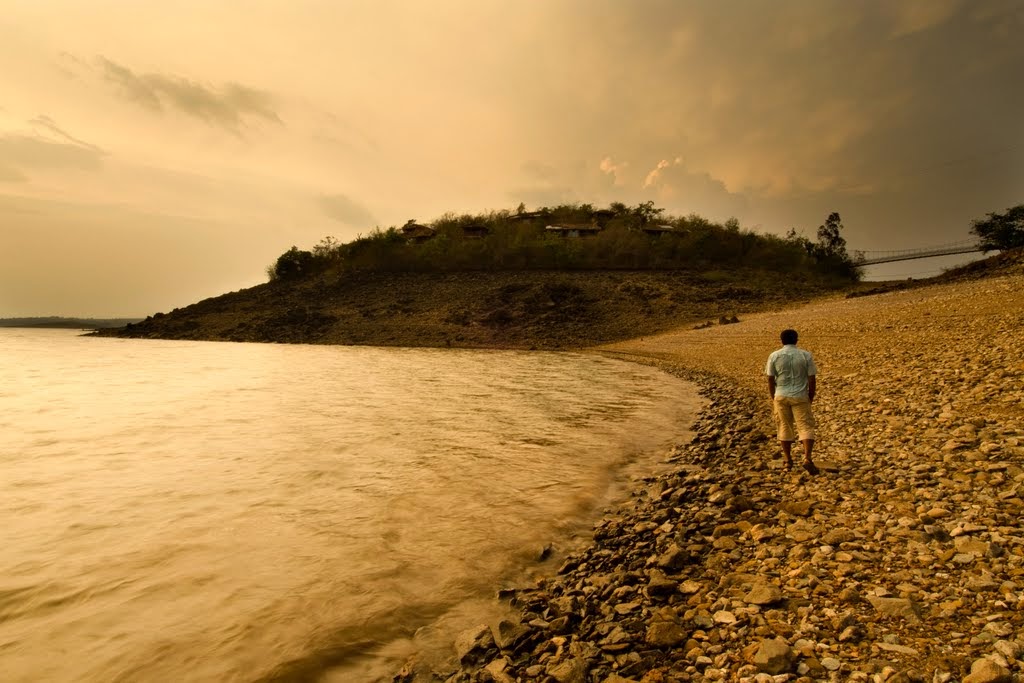

Sunsets by the reservoir display an ever-changing colour palette.


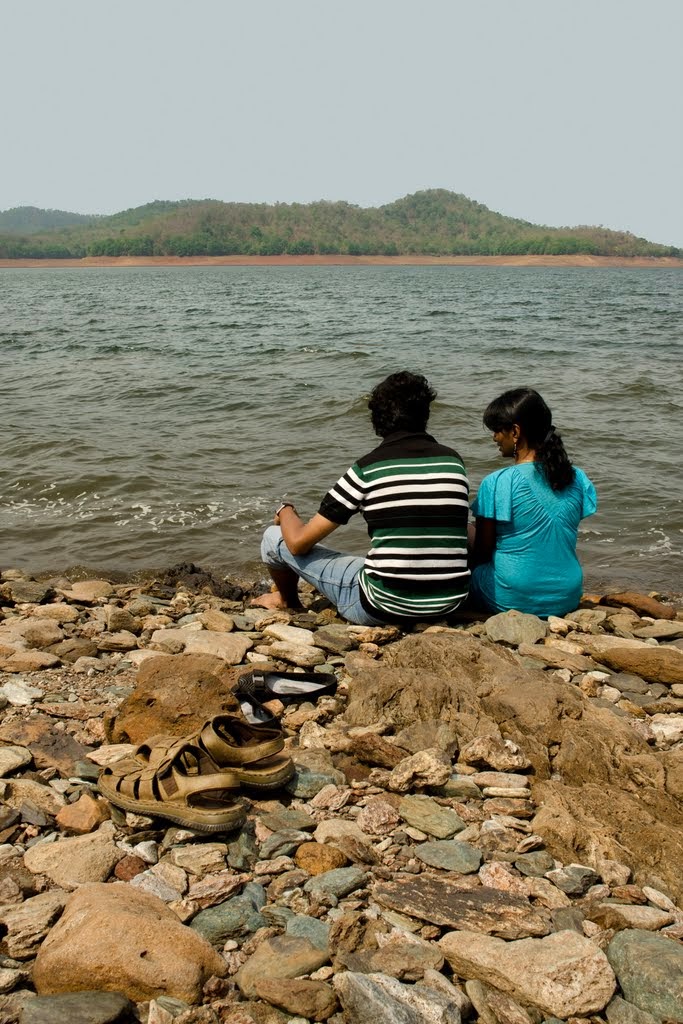
The reservoir’s edge is a soothing place for uninterrupted conversation with somebody. Or, for conversations with your inner-self.


My favourite way to experience Bhadra is through the water and all the life it supports. Boat safaris along the forest edge and around the islands reveal a huge diversity of bird and mammal life. Unique to Bhadra is the congregation of thousands of River Terns on some islands, during their breeding and nesting season from March to May. Raucous, belligerent and fiercely protective of their food and territory, terns can keep you entertained with their antics for hours on end. Especially hilarious is to see them seemingly wash the fish they catch before eating it. Jeep safaris through the predominantly Hunal forest offer an experience quite different from the boat safaris. In winter, these Hunal trees lend a deep-red patina to the otherwise green forest. The chance to spot the melanistic leopard, more famously known as the 'Black Panther', often keeps guests at the edge of their seat.


A boat safari along the fringes of the forest offers a chance to sight many of the birds and mammals which call Bhadra home.


Hyperactive terns against a backdrop of the dam and the reservoir, at sunrise.

At the end of the day, after you return from the safaris, it's time for quiet contemplation. With very few lights lit, your auditory senses are heightened. You can now hear all that you saw - the crunching of the leaves as you make your way along the path, a rustle as something darts across, the creak of the bridge as you cross it, the howl of the wind which rocks the bridge, the lapping of waves at the shore, the relentless drone of Cicadas, and, a voice in your head telling you how Bhadra feels like it belongs to you. And, how you effortlessly feel like you belong to Bhadra. With this thought, you will end your day where I began - in a balcony. Only this time, at Bhadra.


Saturday, 14 September 2013

Under my Umbrella


Revellers await the rain at Worli sea-face, Bombay


A few weeks before the monsoon arrived, we aired out our umbrellas and ensured they needed no repairs. Families went out to buy raincoats and 'rainy shoes'; sometimes, gumboots too. Its arrival coincided with the beginning of a new year at school. We lined the insides of our school bags with plastic covers to prevent our meticulously-wrapped brown paper books from turning into soggy, brown pulp. We shoved crackling plastic bags with a set of ‘change clothes' into already overstuffed work-drawers. 

Gola at Juhu beach
On the day it arrived, we'd all ritualistically run out to dance and get soaked in the first rain. Once it set in, we incessantly looked out of windows and craved pakodas and chai. And we sighed, because on most days, we couldn't get any. Some days, we did get them and we’d be over the moon. Other days, 'makai’ or ‘bhutta’ were a source of great joy too. Sometimes, just for the thrill, we’d indulge in monsoon taboos like gola.

We swathed our feet with 'Band-aids' because our 'rainy shoes' would bite. It didn't matter that the Band-aids would get washed away while wading through calf-deep water. We'd assiduously stick on some more. We'd roll up our trousers, jeans or salwars; I quite think we invented capris. We'd hanker for 'rainy songs' on the radio. We'd think nothing of stepping out in cyclonic storms to get to work, to school, to meet somebody or buy something; the only option would have been to remain home-bound for almost four months. 

A few weeks later, irritation would set in - no more summer mangoes to eat, roads getting flooded, wearing semi-wet clothes most of the time, wading through filthy water, bags getting wet, falling ill. Nonetheless, at the end of each May, we'd sing "Ye re, ye re paoosaa, tula deto paisa, paise jhala khota, paoos aala motha", a Marathi song enticing the monsoon to arrive. The biggest perk of the monsoon obliging was getting sudden holidays - when your road was flooded or your office, school or college was. Though that wasn’t more than a couple of days in a month, it was still looked forward to. Nothing's sweeter than your boss calling to tell you not to come in today, just as you were donning your rainy shoes to step out to catch the 9:29 Churchgate fast.

That's monsoon in Bombay for you, where I grew up. We shared a love-hate relationship with it, as turbulent as the rain-bearing clouds. Each June, we transitioned from summer in a well-oiled drill, to make the monsoon a part of our lives for the next few months. After I moved out of Bombay, I began craving the rains. So, each year, I decided to travel during the monsoons; not to cities, but, to places where I could enjoy it without any of the cares associated with monsoons in Bombay. 

A few times, it didn't rain at all, like when I was at Ashtamudi, Kerala, one August, which is supposed to be peak monsoon. Hubby and I sat longingly by the backwaters, waiting for raindrops to pelt our cottage roof. Sometimes, dark clouds lined the sky and filled me with hope, but it wasn’t meant to be. Once, when the rain wasn’t yet expected, I had a wet trip to Wayanad, Kerala, in the pre-monsoons. Travelling with a bunch of friends, the unexpected showers were fun and brought with them lots of steaming hot chaaya, comfort food, laughter-filled mad scrambles to seek shelter and hiking around Wayanad’s slippery, hilly terrain. 

Monsoon clouds over Ashtamudi Lake
Meenmutty falls, Wayanad

Another year, I spent time only at rainforests, but in two different parts of the world - Valparai, Tamil Nadu, and Borneo. That rain is indeed a life-giver was reinforced by seeing the forests come alive with swathes of green. Fungi sprung in profusion. And, getting wet with us were tiny critters and towering trees. Yet another trip was spent loafing around Belgaum, Karnataka, with friends, hopping from one waterfall to another. And of course, gorging on monsoon favourites dished up by our friend’s mother and a nearby bakery. Last year, I battled leeches at Agumbe, Karnataka, in vain. Most visible were the five bites on my neck, referred to as my ‘pearl necklace’, thanks to the calamine lotion on each bite to reduce itchiness. The unrelenting rain also meant we didn’t bathe for all the three days we were there, due to a lack of hot water.

A Jewel Beetle in the monsoon, Valparai

Dipterocarps shrouded in the evening mist, on a rainy evening at Borneo

Picturesque hut on the 'viewpoint hilltop' at Belgaum

Raindrops bounce off a Vine snake at Agumbe

This year, I was blown away (pun intended) watching the southwest monsoon arrive into India's southern tip, as Radha and I joined our friend Arati, as she chased the monsoon for her story. I remember this trip for the giggle-fest it was and for uninhibitedly getting soaked each day as we chased the chaser of the monsoon. 

Fishermen haul in their catch under a 'first-monsoon' sky in South Kerala

I followed it up with a road-trip with hubby, through central Kerala. We spent time at a beach, by the backwaters and at a forest. We also timed our trip to watch the famous snake-boat race at Alleppey. 

Emerald-green paddy fields, mist and water cascades - a typical monsoon day in Kerala

With a visit to Bandipur this month, this is the most I’ve ever travelled in the monsoon. After four months of being a constant companion, my rain gear has just been packed away in the loft. Until next year, then!     

Goat-herd, Banyan and monsoon clouds - at Bandipur